Product Craft
Prioritizing AI Features: A PM's Framework for Impact, Innovation, and Feasibility
Prioritizing AI features demands a structured approach that goes beyond traditional product prioritization methods, accounting for unique complexities like data dependency, model uncertainty, and ethical considerations. To effectively balance business impact, innovation potential, and technical feasibility, I rely on a multi-dimensional framework that systematically evaluates features through a strategic lens, ensuring we build what truly matters and can actually be delivered.
Over my 17 years in IT and 10 years in product leadership across diverse domains like streaming, fintech, and healthcare, I have seen firsthand how easily AI initiatives can get sidetracked by hype or technical debt. This guide is designed to equip product managers and aspiring AI PMs with a practical rubric to cut through the noise, make data-informed decisions, and drive meaningful AI product development. It is about building a sustainable prioritization muscle, not just a one-off decision.
Why Is Prioritizing AI Features Different from Traditional PM Prioritization?
At its core, all product prioritization aims to maximize value delivery. However, AI introduces several layers of complexity that necessitate a distinct approach. Ignoring these nuances can lead to significant delays, unexpected costs, and even ethical missteps. The traditional RICE or ICE scoring, while useful, often falls short in capturing the full spectrum of AI-specific risks and opportunities.
- Data Dependency and Quality: AI models are only as good as the data they are trained on. Prioritizing an AI feature means first prioritizing the availability, quality, privacy compliance, and ongoing maintenance of its data pipelines. This is a foundational cost and risk rarely encountered with traditional software features.
- Model Uncertainty and Explainability: Unlike deterministic software, AI models can exhibit probabilistic behavior, making outcomes less predictable. Feature success isn't just about functionality; it's about model performance, accuracy, bias, and the ability to explain decisions, especially in regulated industries. This impacts user trust and regulatory compliance.
- Iterative Development and Continuous Learning: AI products are rarely 'done.' They require continuous monitoring, retraining, and adaptation to new data or changing environments (model drift). This means an AI feature's lifecycle extends far beyond initial deployment, influencing resource allocation and long-term maintenance costs.
- Ethical and Societal Impact: AI features can have profound societal implications, from algorithmic bias to privacy concerns. PMs must proactively consider ethical guidelines, fairness, transparency, and accountability during prioritization, not just as an afterthought. This introduces a non-negotiable layer of risk assessment.
- Compute and Infrastructure Costs: Training and deploying large AI models can be incredibly resource-intensive. The cost of compute, storage, and specialized infrastructure needs to be factored into feasibility calculations in a way that is less prominent for many traditional features.
- Talent Specialization: Building and maintaining AI features requires specialized skills – data scientists, ML engineers, AI ethicists – which are often scarce and expensive. Resource availability becomes a critical constraint in a way it might not be for a standard frontend or backend feature.
My Framework: The AI Feature Quadrant (AFIQ) - Impact, Innovation, and Feasibility
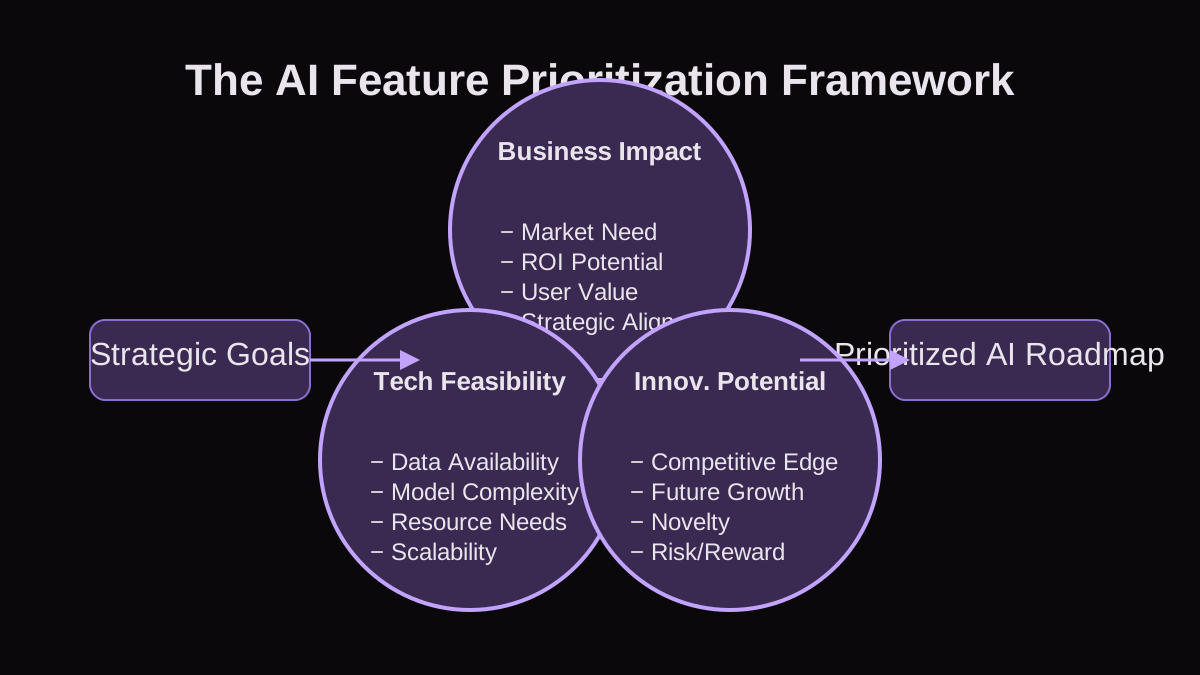
To navigate these complexities, I use a framework I call the AI Feature Quadrant (AFIQ). It's a structured way to evaluate potential AI features against three core dimensions: Business Impact, Technical Feasibility, and Innovation Potential. Each dimension is scored, and the combined score guides prioritization, helping to identify high-value, achievable, and forward-looking initiatives.
Here's how I break down each dimension with actionable criteria:
- 1. Business Impact (Score 1-5, 5 being highest): This evaluates how directly and significantly the feature contributes to strategic business goals, user value, and revenue.
- - Aligns with Strategic Objectives: Does it directly support OKRs, North Star Metric, or company vision? (e.g., increase user engagement, reduce operational costs, open new revenue streams).
- - Quantifiable User Value: How much pain does it solve for users? Can we measure this in time saved, satisfaction increased, or tasks completed? (e.g., personalized recommendations, intelligent automation).
- - Market Differentiation/Competitive Advantage: Does it create a unique offering or significantly improve our competitive standing? Will users switch to us or stay because of it?
- - Revenue Potential/Cost Savings: What is the estimated financial return or operational efficiency gain? Be specific with proxy metrics if direct revenue is hard to quantify initially.
- 2. Technical Feasibility (Score 1-5, 5 being highest - meaning highly feasible): This assesses the technical challenges, data readiness, resource availability, and overall implementation risk.
- - Data Availability and Quality: Do we have the necessary data? Is it clean, labeled, compliant, and sufficient for training? What's the effort to get it ready?
- - Model Complexity and Performance: How complex is the required model? Are there existing open-source solutions? What are the expected accuracy and inference latency? What's the risk of model drift?
- - Resource Availability: Do we have the ML engineers, data scientists, and infrastructure to build and maintain this? What's the opportunity cost?
- - Technical Debt and Infrastructure Readiness: Does our existing tech stack support this? What infrastructure changes or technical debt repayment are required?
- - Time to Market (TTM): What's a realistic timeline for an MVP? What are the dependencies that could block us?
- 3. Innovation Potential (Score 1-5, 5 being highest): This dimension captures the feature's ability to push boundaries, generate new insights, or create future opportunities, even if immediate impact isn't massive.
- - Learning & Experimentation: How much new knowledge or data will we gain from building this feature? Does it unlock future AI capabilities or research avenues?
- - Strategic Technology Bet: Is this a foundational piece of technology that could lead to significant future products or platforms, even if the initial use case is small?
- - Market Trend Alignment: Does it position us well for emerging AI trends or anticipate future user needs before they become mainstream?
- - R&D Investment: Is it a calculated investment in R&D that could yield disproportionate returns down the line, perhaps even creating new IP?
Putting the AFIQ Framework to Work: A Step-by-Step Example
Let's walk through a scenario for a hypothetical healthcare platform focused on preventative care. Our strategic goal is to reduce hospital readmission rates and improve patient adherence to treatment plans. We have a backlog of potential AI features, and we need to prioritize three of them: a symptom checker, a personalized medication adherence reminder, and an early disease prediction model.
Our team uses a simple 1-5 scoring for each criterion, then sums them up. Higher scores indicate higher priority. We also use a weighting system: Business Impact (x2), Technical Feasibility (x1.5), Innovation Potential (x1).
Feature 1: AI-Powered Symptom Checker (Chatbot)
- Business Impact: 3 (Good for initial engagement, but direct readmission reduction is indirect. High user value for convenience, but risk of misdiagnosis needs mitigation).
- Technical Feasibility: 4 (Large language models are mature, but medical domain fine-tuning and accuracy validation are complex. Data for symptoms is generally available, but linking to specific patient history needs work. Regulatory compliance for medical advice is a huge hurdle).
- Innovation Potential: 2 (Many symptom checkers exist. While useful, it's not groundbreaking. Learning comes from user interaction data, but core tech is established).
Feature 2: Personalized Medication Adherence Reminder System
- Business Impact: 5 (Directly addresses readmission rates by improving adherence, a core strategic goal. High user value by preventing critical health declines. Clear ROI potential for reduced healthcare costs).
- Technical Feasibility: 4 (Requires integrating with EHR/pharmacy data, which is complex but feasible with existing APIs. Personalization algorithms are relatively straightforward. Model drift is low. Ethical considerations around nagging vs. helpfulness are manageable).
- Innovation Potential: 3 (Personalized reminders exist, but integrating AI for dynamic, context-aware suggestions based on patient behavior, side effects, and daily routines can be innovative. Opportunity for learning about behavioral nudges).
Feature 3: Early Disease Prediction Model for High-Risk Patients
- Business Impact: 5 (Highest impact on reducing readmissions and improving preventative care. Unlocks significant new value for patients and healthcare providers. Strong competitive differentiator).
- Technical Feasibility: 2 (Extremely challenging. Requires vast amounts of high-quality, longitudinal patient data from various sources. Model complexity is very high; explainability is critical and difficult. Regulatory hurdles for predictive diagnostics are immense. High risk of bias if data isn't representative).
- Innovation Potential: 5 (Highly innovative. Pushes the boundaries of preventative medicine. Generates significant research opportunities and could lead to new IP. Positions the platform as a leader in AI-driven healthcare).
Now, let's apply the weighting and sum the scores:
- Symptom Checker: (3 2) + (4 1.5) + (2 * 1) = 6 + 6 + 2 = 14
- Medication Adherence: (5 2) + (4 1.5) + (3 * 1) = 10 + 6 + 3 = 19
- Disease Prediction: (5 2) + (2 1.5) + (5 * 1) = 10 + 3 + 5 = 18
Based on this weighted scoring, the Personalized Medication Adherence Reminder System comes out on top. While the Early Disease Prediction Model has massive potential, its low feasibility score (due to data readiness, model complexity, and regulatory challenges) makes it a higher-risk, longer-term bet. The Symptom Checker, while feasible, offers less direct impact on our core strategic goal. This framework helps us make a defensible decision, identifying the feature with the best blend of immediate strategic impact and achievable execution.
Common Pitfalls in AI Feature Prioritization (and How to Avoid Them)
Even with a robust framework like AFIQ, it's easy to stumble. AI product management is a continuous learning process. Here are some common mistakes I've observed and how to sidestep them.
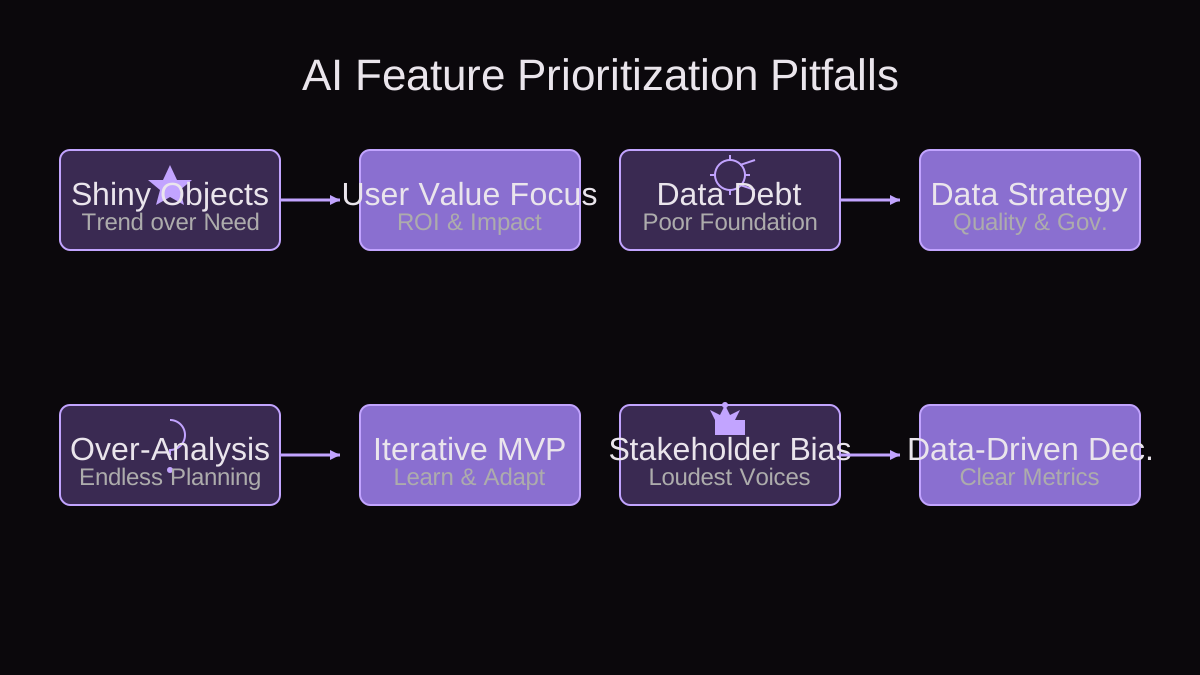
- 1. Shiny Object Syndrome: Failure Mode: Prioritizing a feature simply because it uses the latest, most complex AI tech (e.g., a new LLM) without a clear problem statement or business value. Detection/Avoidance: Always start with the problem. Does this AI solution genuinely address a significant user need or business challenge? Revisit the 'Business Impact' and 'Innovation Potential' scores critically. Is the innovation serving a purpose beyond just being new?
- 2. Ignoring Data Debt: Failure Mode: Underestimating the effort and cost associated with acquiring, cleaning, labeling, and maintaining the necessary data for an AI model. Prioritizing features where data simply isn't ready. Detection/Avoidance: Deep-dive into 'Data Availability and Quality' within 'Technical Feasibility.' Engage data engineers and data scientists early. Treat data readiness as a blocker if critical gaps exist; prioritize data infrastructure work first.
- 3. Underestimating Model Drift and Maintenance: Failure Mode: Treating an AI model as a 'set it and forget it' feature. Not accounting for ongoing monitoring, retraining, and potential performance degradation over time. Detection/Avoidance: Build 'post-launch support' and 'model lifecycle management' into your feasibility estimates. Include ML Ops considerations from day one. Define clear metrics for model performance and set alerts for drift. This impacts long-term cost and resource allocation.
- 4. Neglecting Ethical AI and Bias: Failure Mode: Prioritizing features without a rigorous assessment of potential biases, fairness concerns, privacy implications, or explainability requirements. Detection/Avoidance: Integrate ethical AI review into your prioritization process. This isn't just an engineering task; it's a product responsibility. Consult with legal, compliance, and ethical AI specialists. If a feature scores high on impact but carries significant ethical risk, consider de-prioritizing or investing heavily in mitigation strategies.
- 5. Over-reliance on Accuracy Metrics Alone: Failure Mode: Focusing solely on model accuracy as the success metric, ignoring other crucial factors like precision, recall, false positives/negatives, latency, or user experience. Detection/Avoidance: Define a holistic set of success metrics that align with business goals and user value. For instance, in a medical diagnostic tool, false negatives might be far more critical than overall accuracy. Understand the real-world impact of different error types.
- 6. Lack of Cross-Functional Alignment: Failure Mode: Prioritizing in a vacuum, leading to misaligned expectations between product, engineering, data science, legal, and business stakeholders. Detection/Avoidance: Ensure all key stakeholders are part of the scoring and discussion process. Facilitate workshops to discuss trade-offs and build shared understanding. Transparency about scores and reasoning is key to avoiding friction later.
Building a Prioritization Culture: Beyond the Framework
A framework is a tool, not a dogma. The true power lies in how you embed it into your team's culture. Prioritization is not a one-time event; it's a continuous conversation. As an AI PM, your role is to foster an environment where tough questions are asked, assumptions are challenged, and data guides decisions.
Encourage experimentation and learning. AI product development is inherently iterative. Embrace the idea of MVPs for AI features to test hypotheses, gather real-world data, and de-risk larger investments. Be prepared to pivot or even deprecate features if initial results don't align with expectations. The ability to adapt quickly is a competitive advantage in the AI space.
Finally, remember the human element. AI products are built by people, for people. Maintain a strong empathy for your users and a keen awareness of the societal implications of your work. Prioritizing AI features isn't just about algorithms; it's about building responsible, impactful, and valuable products that genuinely improve lives.
Key Takeaways
- AI feature prioritization requires a distinct approach due to complexities like data dependency, model uncertainty, and ethical considerations.
- The AI Feature Quadrant (AFIQ) framework evaluates features based on Business Impact, Technical Feasibility, and Innovation Potential using specific, numbered criteria.
- Business Impact assesses alignment with strategic goals, user value, market differentiation, and financial returns.
- Technical Feasibility considers data readiness, model complexity, resource availability, infrastructure, and time to market.
- Innovation Potential measures learning opportunities, strategic technology bets, market trend alignment, and R&D investment.
- Use a weighted scoring system within AFIQ to reflect the relative importance of each dimension to your specific product strategy.
- Avoid common pitfalls like Shiny Object Syndrome, ignoring data debt, underestimating model maintenance, and neglecting ethical AI considerations.
- Foster a culture of continuous prioritization, cross-functional collaboration, and iterative learning, viewing frameworks as guides, not rigid rules.